
Bring the Wild Into the Classroom
Book a mobile reptile presentation for a school, library, daycare, summer camp or community program in Metro Vancouver. Educational, engaging and fully insured.
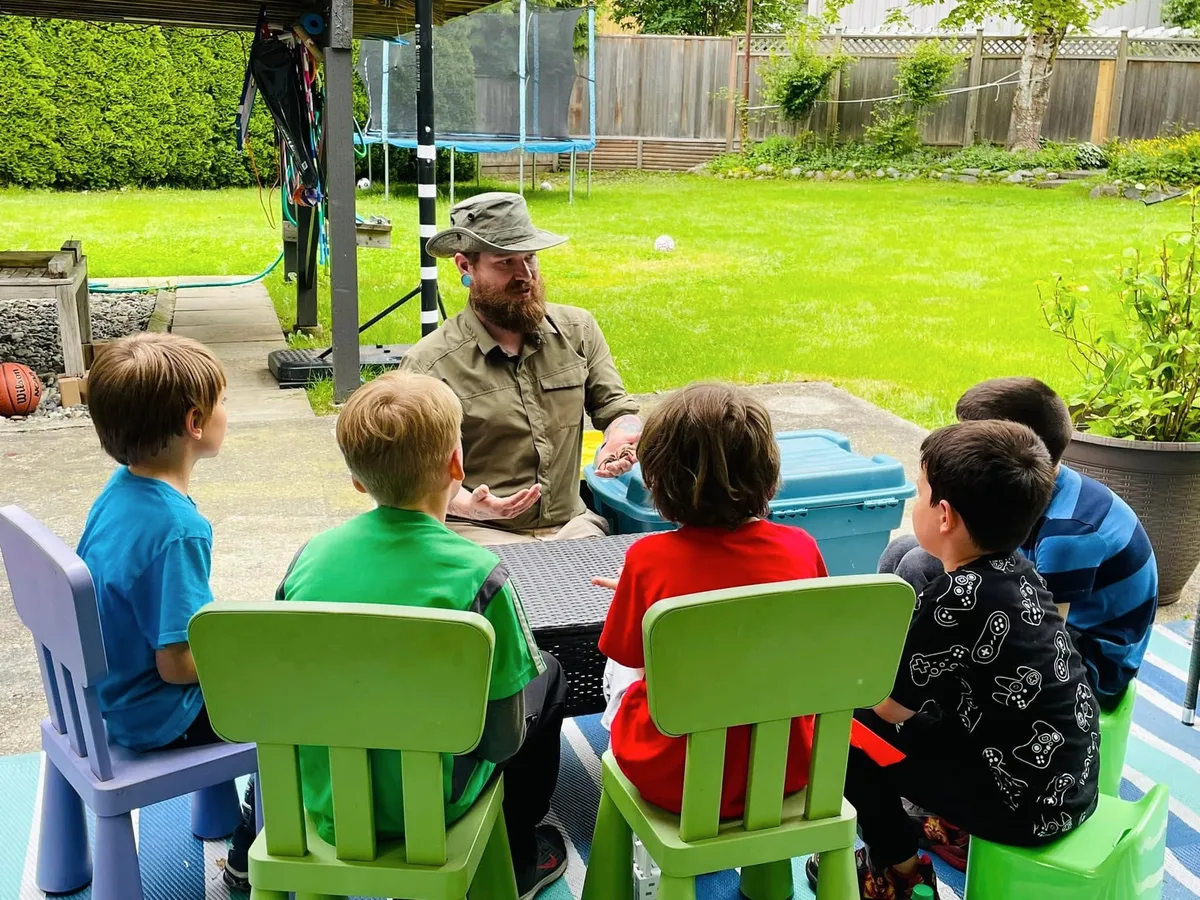
West Coast Exotics brings mobile reptile education to schools, libraries, daycares, camps and community programs.
Quick answer: West Coast Exotics provides mobile educational reptile presentations for schools, libraries, daycares, summer camps and children’s programs across Metro Vancouver and the Lower Mainland.
What educational activity can captivate an entire room?
Bring a snake into it.
Kevin regularly presents in schools and libraries. His Wild Encounters combine live animals, surprising science, age-appropriate humour and practical lessons about conservation and responsible pet ownership.
The result is more than a reptile show. It is an educational experience children can see, hear and remember.
A field trip that comes to you
Organizing a field trip can mean buses, permission forms, travel time and accessibility planning.
West Coast Exotics brings the learning directly to your venue. Presentations can work for:
- preschools and daycares;
- elementary and middle-school classes;
- school-wide assemblies;
- public and school libraries;
- summer camps;
- after-school and homeschool groups;
- youth clubs, community centres and recreation programs.
The experience can be adapted to the children’s ages, the audience size and the program’s learning goals.
What do children learn?
A live reptile presentation can introduce biology, ecology and animal care in a way children immediately understand.
Students may explore:
- how snakes move without legs;
- how reptiles use their senses;
- how scales and shells protect animals;
- why reptiles need heat from their surroundings;
- how camouflage helps animals survive;
- food chains, habitats and adaptations;
- conservation and responsible exotic-pet ownership.
The exact animals vary because their health and welfare come first. A standard Wild Encounter generally introduces 8–10 animals.
Curiosity makes the lesson stick
A picture of a snake can begin a lesson. A living snake creates a room full of questions.
Why does it flick its tongue? Can it hear? Is it slimy? How does it know where to go?
The presenter can explain an idea, connect it to the animal and invite children to observe the evidence for themselves. Seeing, listening and asking turn an abstract lesson into a shared memory.
Learning without forced participation
Some children are eager to come closer. Others prefer to watch from their seats. Both responses are welcome.
Guests can participate by observing, listening, asking questions, making predictions and joining an appropriate interaction when invited.
Touching an animal is never required.
Conservation and responsible ownership
Reptiles are sometimes treated as frightening creatures, novelty purchases or easy starter pets. None of those ideas tells the full story.
A reptile may need specialized heating, lighting, food, housing and veterinary care. Some species live for decades or grow much larger than buyers expect.
Many exotic animals eventually become unwanted pets. Their stories teach an important lesson: an animal is a long-term responsibility, not a toy.
A natural fit for libraries and camps
Libraries can pair a presentation with summer reading, science programming, family literacy events and displays about reptiles, habitats or conservation. A child who meets a tortoise or snake may leave looking for a book that answers the next question.
For camps, a mobile presentation creates a memorable shared activity without requiring an off-site trip. It fits wildlife, science, ecosystems, brave explorers, conservation and dinosaur themes.
Package options may be available when an organization books more than one presentation.
For teachers, librarians and program organizers
Kevin is a trained zookeeper with more than 20 years of presentation experience. He regularly presents for school and library audiences and personally reviews every inquiry.
When requesting a presentation, organizers can provide the group’s ages, expected attendance, preferred dates, number of presentations, venue information, accessibility considerations, learning goals and required documentation.
West Coast Exotics carries $2 million in liability insurance coverage.
School and library presentation FAQ
Does West Coast Exotics visit schools and libraries?
Yes. Kevin regularly presents at schools and libraries, as well as daycares, camps, community centres and youth programs.
What ages are the presentations for?
Presentations can be adapted for preschool, elementary and older school-age groups.
Is this a school assembly or classroom presentation?
It can be either, depending on the audience, room and program goals.
Do students have to touch the animals?
No. Students can participate by observing, listening and asking questions.
Can an organization book more than one show?
Yes. Package options may be available for multiple presentations.
Is West Coast Exotics insured?
Yes. West Coast Exotics carries $2 million in liability insurance coverage.
The best educational programs do not only provide facts. They give children a reason to keep asking questions.
Explore school and daycare presentations or ask Kevin about your group.
 Bring the questions with you
 Ready for a Wild Encounter?
Tell Kevin about your date, group and location. He’ll reply with availability and your full quote.
Check Your Date